How It Works
Pricing
Extensions
Sign In
Create Account
How It Works
Pricing
Extensions
Sign In
Create Account
One bio link
for everything
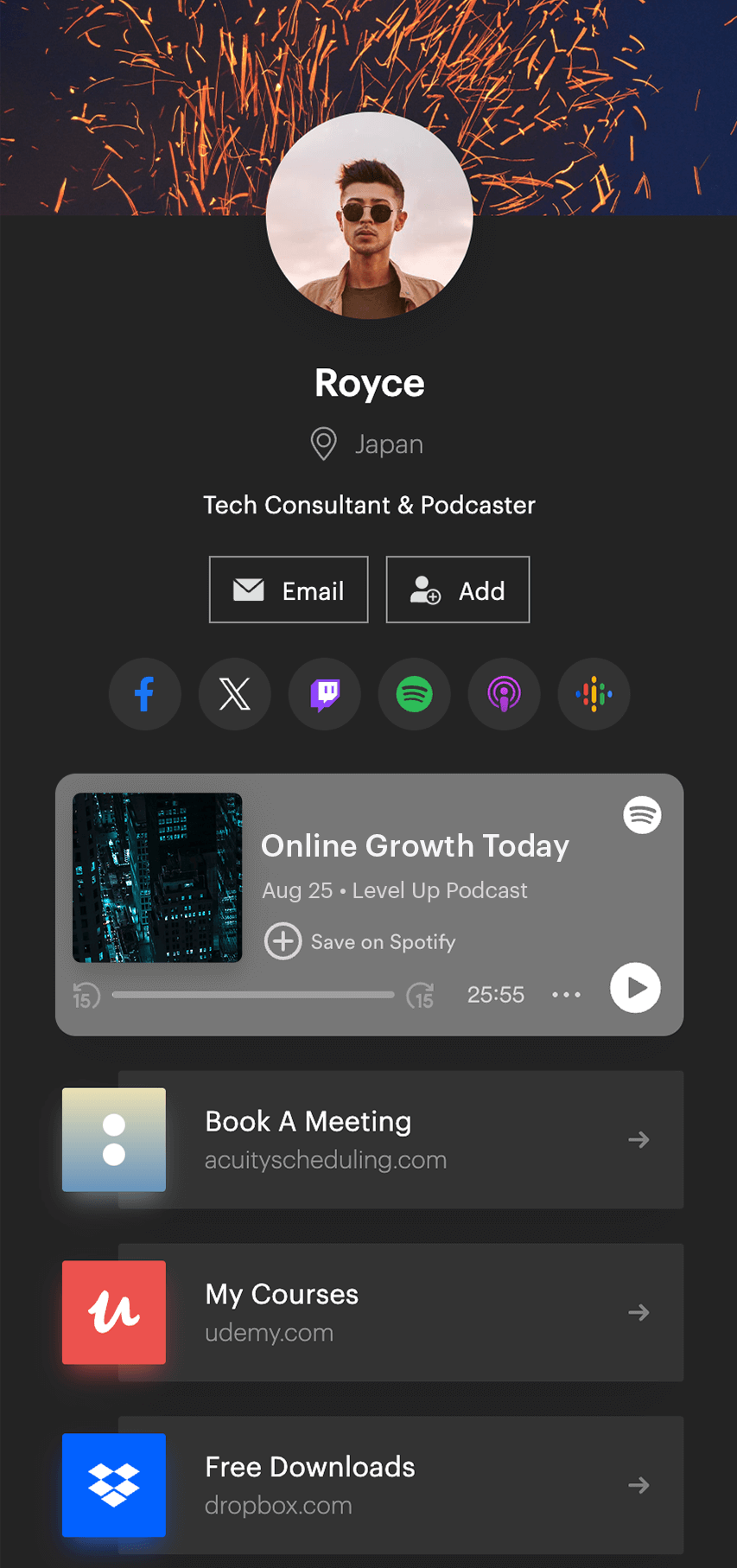
Share and cross promote your links, music, videos, social media, and more on one page.
solo.to/
Your digital world, connected
Unify your social media with one simple bio link.
Asher
Let's stay connected
solo.to/asher
Asher
Let's stay connected
solo.to/asher
1.3m
10.5k
4205
Asher
Let's stay connected
solo.to/asher
Asher
Let's stay connected
solo.to/asher
Asher
@asher · 7/7/23
I've had this new song on repeat all day, can you guess what it is?
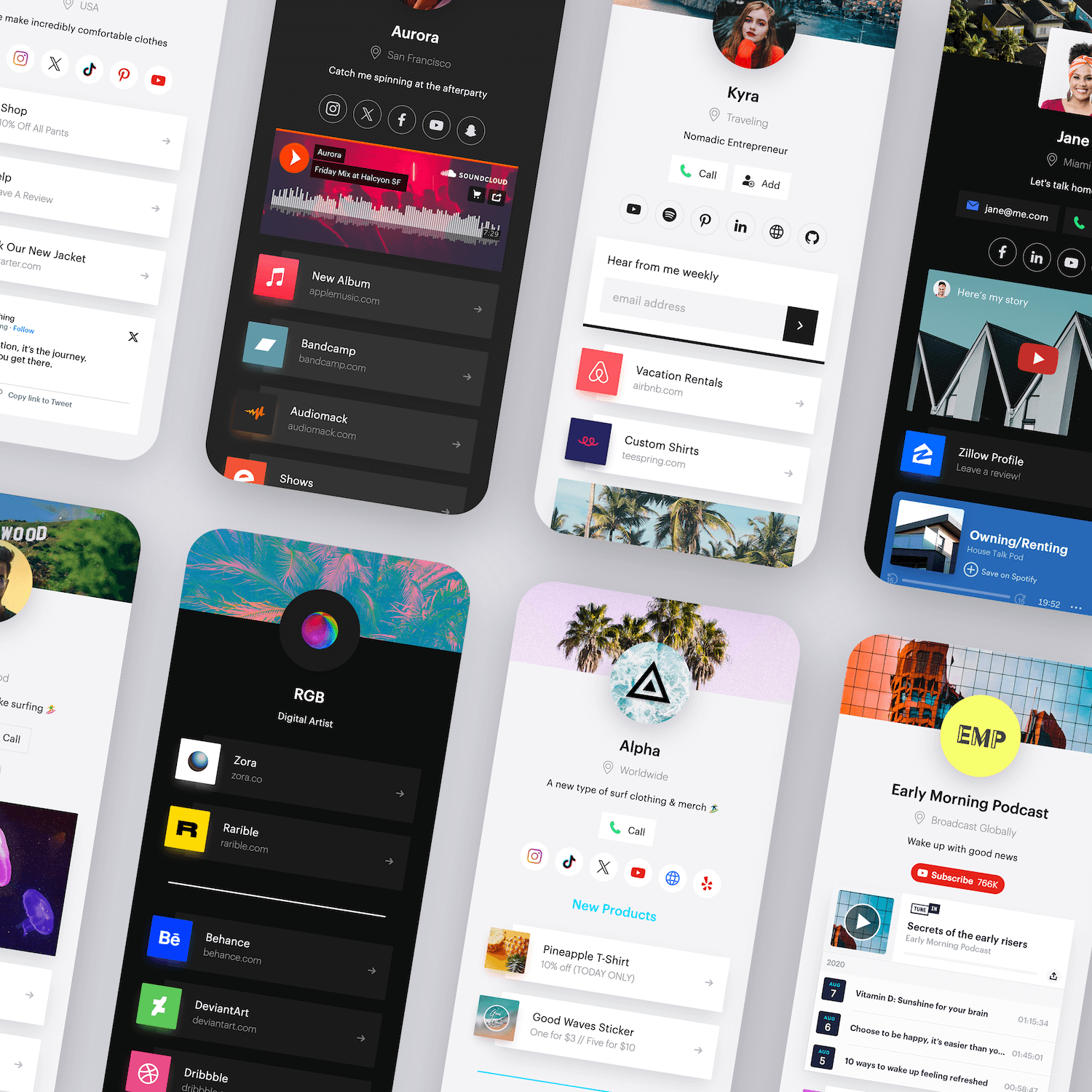
Powerful features made for...
Musicians
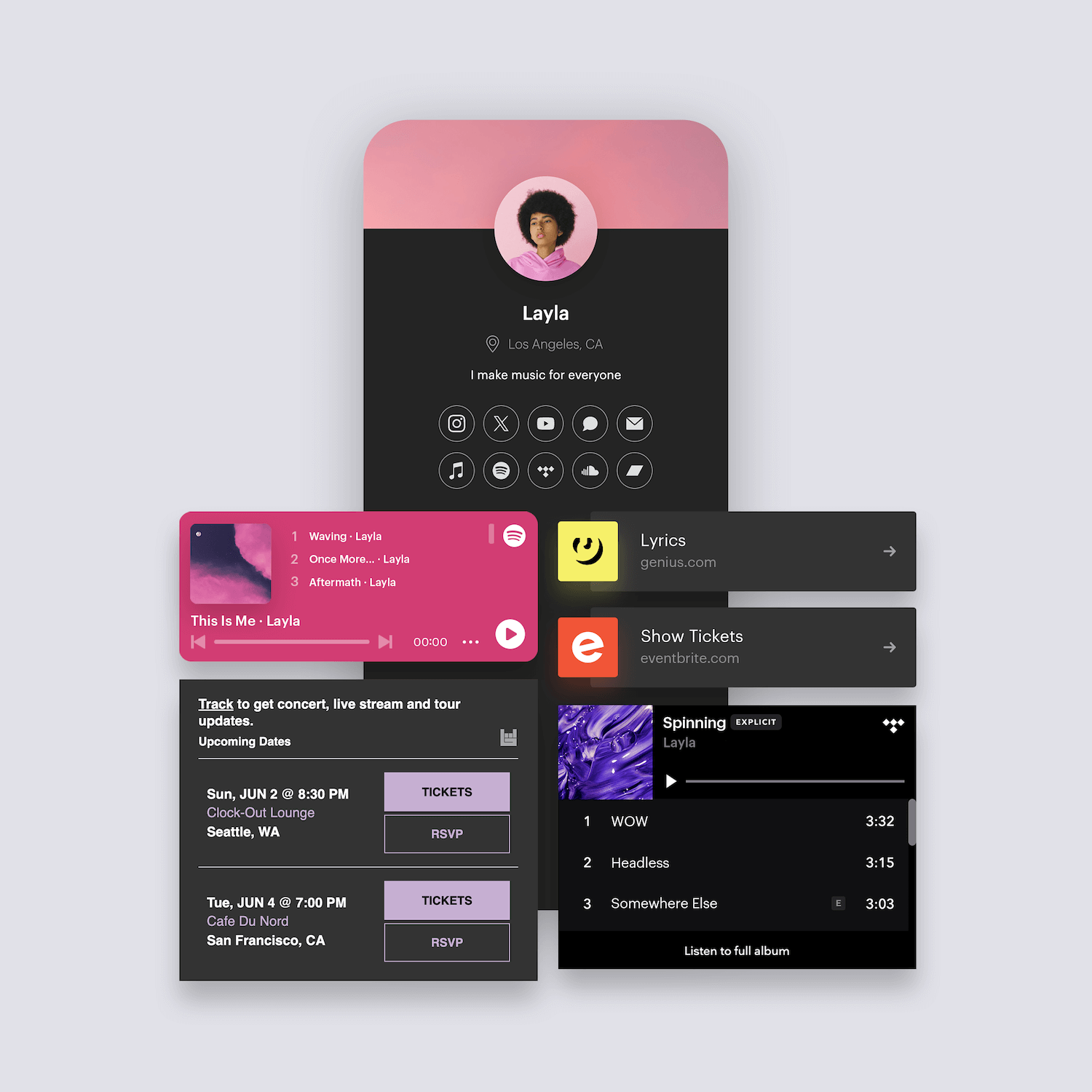
Share your songs, playlists, videos, events, and more so your fans can easily connect with you.
Creators
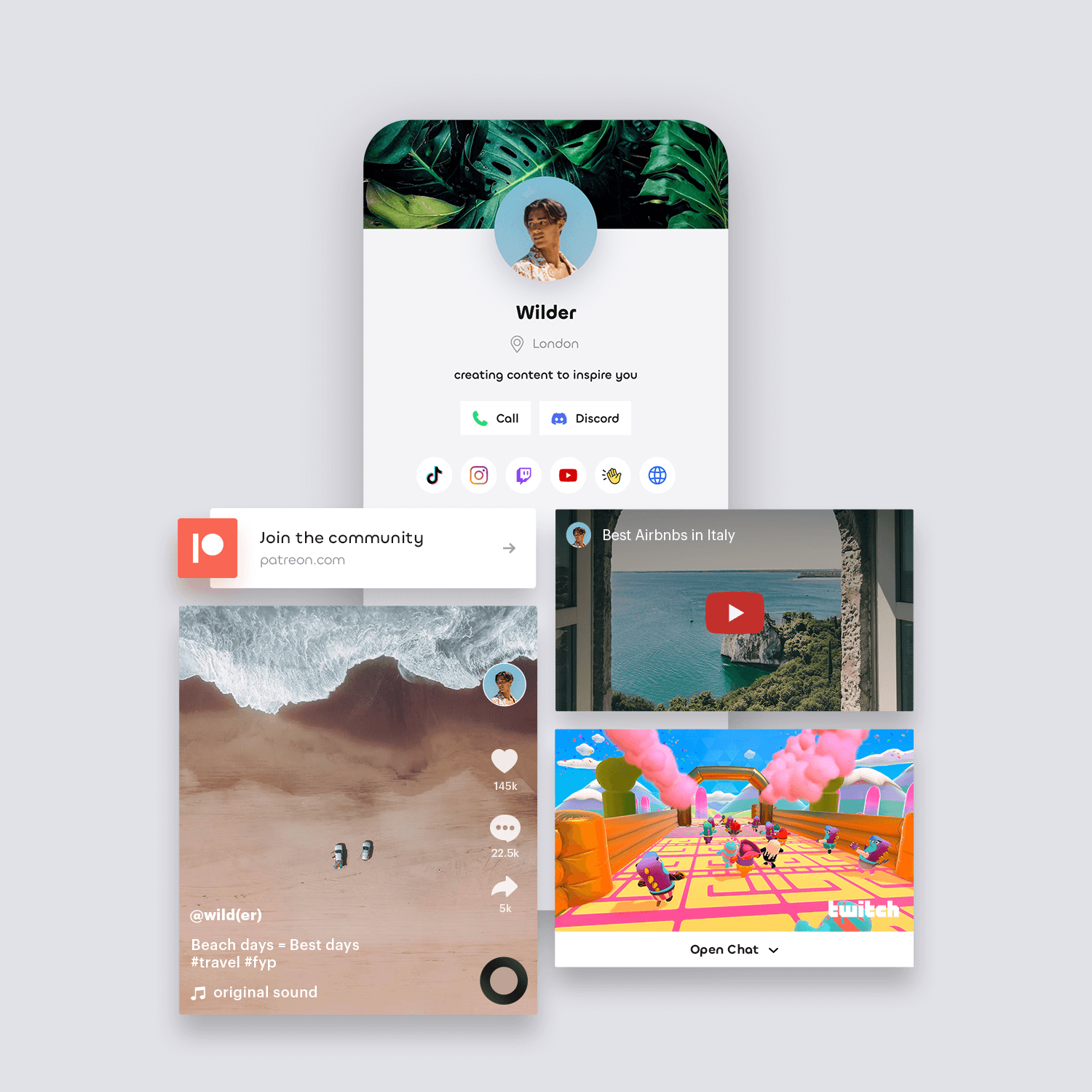
Cross promote your content and gain new followers across all your social platforms.
Artists
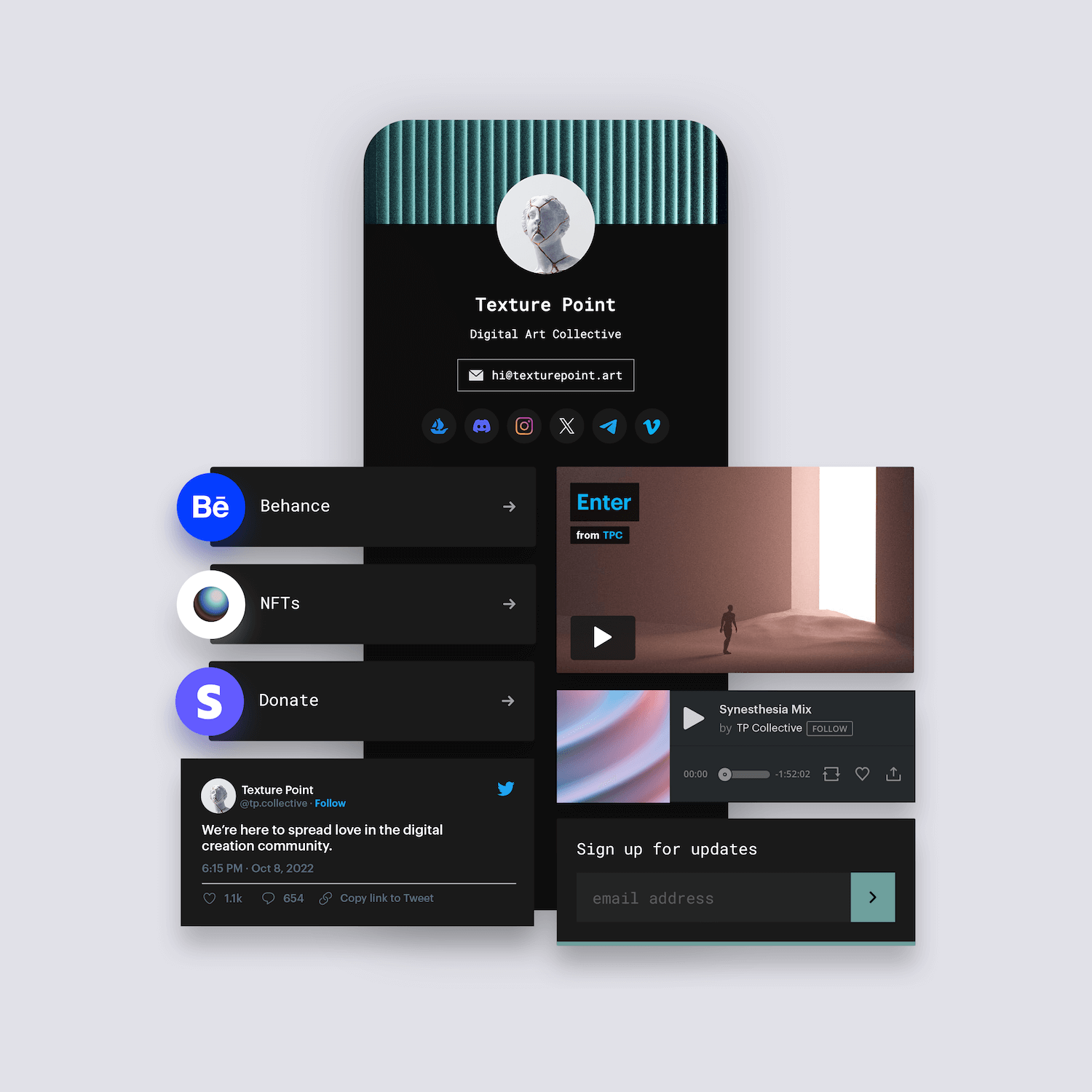
Showcase your artwork, portfolios, videos, and all the things that make you, creatively you.
Businesses
Make it easy for customers to find, follow, contact, and engage with your brand.
and many others
Keep your online presence organized in one convenient location with a single link.
Musicians
Share your songs, playlists, videos, events, and more so your fans can easily connect with you.
Creators
Cross promote your content and gain new followers across all your social platforms.
Artists
Showcase your artwork, portfolios, videos, and all the things that make you, creatively you.
Businesses
Make it easy for customers to find, follow, contact, and engage with your brand.
and many others
Keep your online presence organized in one convenient location with a single link.
XayLi Barclay
solo.to/xaylibarclay
CLIFFORD LUU
solo.to/cliffordluu
Madilyn Paige
solo.to/madilyn
ris
solo.to/risris
chell.
solo.to/chell
Matt Linkert
solo.to/mattlinkert
Speaker Honey
solo.to/speakerhoney
Kara Fedrigon
solo.to/karagamii
Kelly Cardenas
solo.to/kellycardenas
pluko
solo.to/pluko
Neel
solo.to/neel
CONCRETE PANTHER
solo.to/concretepanther
Get your link
GameboyJones
solo.to/gameboyjones
Courtnee Futch
solo.to/courtneefutch
NayNay
solo.to/nay.tesseract
Bengal Cat Kona
solo.to/bengalcatkona
Qrion
solo.to/qrion
Hanguk Hapa
solo.to/hangukhapa
JVNA
solo.to/jvna
Dayo
solo.to/dayo
Big Pokey
solo.to/sucbigpokey
Kanishia
solo.to/kanishiafairyhair
Morgin Madison
solo.to/morginmadison
Andrew Wille
solo.to/andrewoptics










 1.3m
1.3m